
Thousands of new clothing brands launch each year without trademark protection, leaving their names, logos, and hard-earned reputations vulnerable to copycats. If you are building a clothing line, your brand name and logo deserve the same level of care as your designs and marketing. Federal trademark registration with the USPTO is the most reliable way to lock in nationwide rights for your fashion brand, and it is more accessible than most founders realize.
Key Takeaways
A clothing brand trademark protects your brand name, logo, and label-not the cut or fabric of your garments. In the fashion industry, trademarks protect branding elements associated with clothing, such as the name sewn into a neck label or a logo printed on a hang tag. Federal registration with the USPTO is the gold standard because it provides exclusive ownership rights, a legal presumption of validity, and tools that common-law rights simply cannot match.
The Law Office of Lindsey M. Straus helps clothing brands, fashion startups, print-on-demand sellers, and e-commerce shops nationwide secure federal registration for apparel marks in Class 25-and, when appropriate, Class 35 for retail store services. If you are ready to protect your label, call (508) 896-8008 or contact us online for a consultation.
Using a trademark in commerce grants common-law trademark rights in the geographic area where you sell, but those rights are limited and difficult to enforce beyond your local market. Only a federal clothing brand trademark unlocks nationwide protection, USPTO presumptions, and enrollment in programs like Amazon Brand Registry. This article walks you through what you can trademark in a clothing line, the correct trademark classes and specimens for apparel, realistic costs and timelines, and how a trademark attorney can help you avoid common mistakes.
Lindsey M. Straus has over 20 years of trademark experience and has obtained hundreds of federal registrations for small businesses and fashion brands, offering big-firm know-how at small-firm rates from Brewster, Massachusetts.
What Is a Clothing Brand Trademark?
A clothing brand trademark is any word, phrase, logo, or symbol that identifies the source of your apparel and distinguishes your clothing line from competitors. It is the brand name on your neck labels, the logo on your hang tags, the mark on your packaging-anything that tells customers "this garment comes from us."
Trademarks protect brand identity like names, logos, and slogans used on or with clothing goods. A trademark does not, however, cover clothing design elements like garment cuts, color combinations, or fabric patterns. Those elements may qualify for copyright or design patent protection, but they fall outside the scope of a clothing brand trademark.
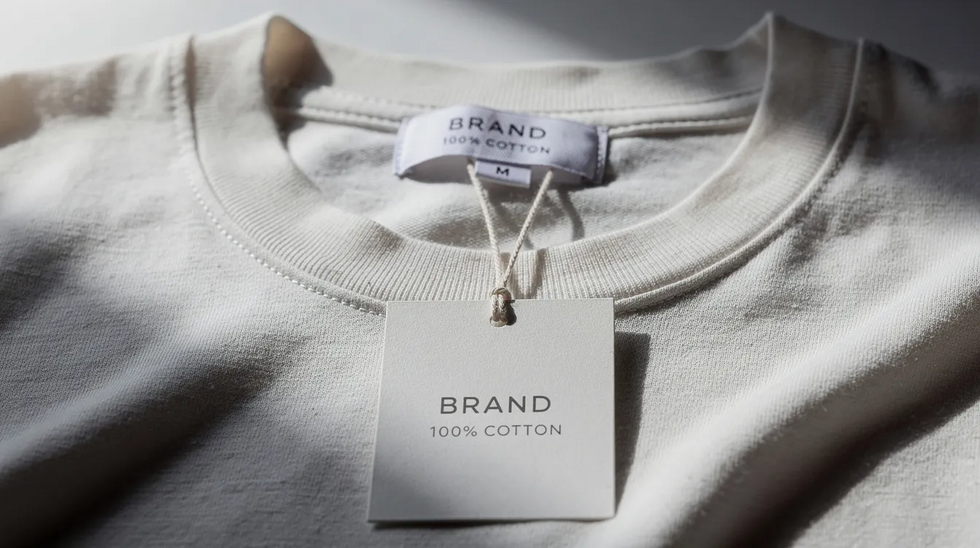
For clothing and fashion brands, the trademark typically appears on labels, tags, waistbands, shoe tongues, pocket labels, or product packaging. A large decorative design splashed across the front of a t-shirt is usually treated as ornamentation, not as a source identifier-a critical distinction that trips up many new brands.
U.S. trademark law is federal, so a properly obtained federal registration can protect a clothing line nationwide regardless of where the designer or boutique is physically located. Whether you are based in Los Angeles, Brooklyn, or a small town in the Midwest, your registered mark carries the same weight.
If you are unsure whether your logo or brand name for a clothing line can be protected, call (508) 896-8008 or contact the Law Office of Lindsey M. Straus online for individualized guidance.
Why Trademarking a Clothing Brand Matters in 2026
The fashion market in 2026 is more crowded than ever. Independent clothing brands on Shopify, Etsy, and Amazon have exploded in number, and print-on-demand technology lets anyone create a clothing company overnight. That means more opportunity for creative founders-and significantly more risk that someone else will launch a confusingly similar brand.
Here are the practical benefits of a clothing brand trademark:
-
Exclusive nationwide rights to use your mark in connection with the apparel you list in your registration
-
A legal presumption of ownership and validity that strengthens your position in any dispute
-
The ability to use the ® symbol after registration, signaling credibility to customers and retailers
-
Stronger leverage for takedowns on platforms like Amazon, Etsy, and Instagram
-
Eligibility for Amazon Brand Registry, which requires a registered mark to unlock its most powerful seller-protection tools
Without federal registration, a clothing line may have only narrow, local common-law rights based on where it actually sells. Trademark rights can arise from using a mark in commerce without registration, but those rights extend only so far. If someone in another state files first and secures federal rights to a similar name, you could face an expensive rebrand.
Fashion brands rely on reputation and repeat customers. Losing control of a clothing brand name or logo to a confusingly similar mark can dilute brand value, confuse customers, and erode years of goodwill. Trademarking increases brand image and consumer loyalty by ensuring that your audience always knows exactly who stands behind the label.
Filing a formal application with the USPTO provides additional legal benefits, including the right to sue in federal court and access to enhanced remedies. Trademark registration protects your brand identity legally. Treat brand protection as an early business investment-not an afterthought-especially if you are planning wholesale distribution, collaborations, or expansion to national retailers.
What Can and Cannot Be Trademarked in a Clothing Line
Fashion brands often misunderstand what a clothing brand trademark can cover. Not everything about a garment is eligible for trademark protection, and knowing the boundaries early prevents wasted time and money.
What you can trademark:
-
A brand name (word mark), such as a distinctive apparel brand name that does not merely describe the product
-
A logo or icon appearing on labels, hang tags, or packaging
-
Stylized wording as used on tags or labels that functions as a source identifier
-
Short, distinctive slogans that identify the clothing brand-not just decorative sayings
-
Trademarks can protect unique color schemes associated with a brand, such as a signature color combination that consumers recognize as yours
What you usually cannot protect with a trademark:
-
You cannot trademark clothing designs or patterns themselves; garment cuts, functional design features like pockets and zippers, and basic fabric patterns fall outside trademark territory
-
Generic phrases like "LOVE" or "BOSTON" splashed across a t-shirt front that function only as ornamentation
-
Terms that merely describe the product (e.g., "Soft Cotton Tees") without acquired secondary meaning
Clothing designs and prints may qualify for copyright registration as pictorial, graphic, or sculptural works. If you have original artwork on your apparel, a separate copyright registration can provide valuable protection for that creative work alongside your trademark.
Think of it this way: a distinctive stitched logo on a pocket or label that customers immediately associate with your fashion brand is trademark territory. A large decorative image covering the entire front of a hoodie with no source-identifying function is not.
Trademark Classes for Clothing Brands: Class 25, Class 35, and Beyond
The USPTO does not protect "a clothing brand" in the abstract. It protects a mark in connection with specific goods and services organized into international trademark classes. Choosing the right class is one of the most important decisions in the trademark filing process.
Class 25: The core class for apparel
Class 25 is the most common class for clothing trademarks. It covers finished garments and wearable goods, including t-shirts, hoodies, leggings, dresses, jackets, footwear, and headwear like baseball caps. If you sell clothing, this is where your filing starts.
What does not belong in Class 25:
-
Bags and wallets → Class 18
-
Jewelry → Class 14
-
Raw fabric and fibers → Classes 23 and 24
-
Fashion accessories like keychains → various other classes
The USPTO Trademark ID Manual is the authoritative reference for identifying exactly which goods fit into which trademark class.
Class 35: Retail store services
Class 35 includes retail store services for clothing brands. If you operate your own branded e-commerce site or a brick-and-mortar retail store selling apparel under your mark, Class 35 may be appropriate. For example, "online retail store services featuring clothing, footwear, and accessories" falls here. This class covers the service of operating a store-not the goods themselves.
Planning for expansion:
Some fashion brands eventually file in multiple classes as they expand product lines-Class 18 for bags, Class 9 for branded phone cases, and so on. A thoughtful filing strategy that anticipates growth can save money and prevent gaps in protection. Each additional class requires a separate application fee, so it pays to plan strategically rather than filing reactively.
Ornamental Use vs. Trademark Use on Clothing
For clothing goods, the USPTO often refuses registrations when a phrase or design is used only decoratively. This is known as an ornamental use refusal, and it catches many fashion brands off guard.
Large, front-and-center designs or slogans across a t-shirt, sweatshirt, or hat are frequently considered ornamental. If a phrase looks like a fashion statement rather than a brand name, the examining attorney will likely reject the specimen. This is one of the most common reasons clothing brand trademark applications stall.
Trademarks must function as source identifiers on labels or tags. To show proper trademark use, clothing brands should display the mark on:
-
Neck labels or sewn-in tags
-
Hang tags attached to the garment
-
Waistbands, shoe tongues, or interior pocket labels
-
Product packaging
-
A small logo on the upper-left chest area, consistent with how brand identifiers traditionally appear on apparel
A common mistake is submitting a photo where the mark appears only as a decorative graphic on the front of the actual product. That kind of specimen almost always triggers an office action, adding months of delay to the trademark process.
An experienced trademark attorney can help structure brand use and specimens from the start to avoid these refusals-especially for slogan-driven clothing lines or print-on-demand apparel brands.
Specimens for Clothing Brand Trademarks: What the USPTO Wants to See
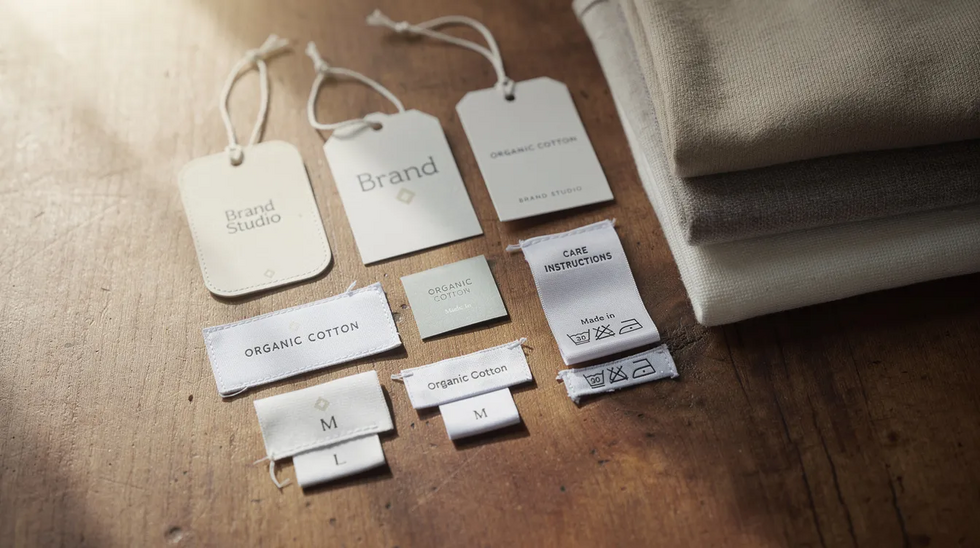
A trademark specimen is a real-world example showing how your clothing brand trademark is used in commerce on or with the apparel goods. It is not a mock-up, a rendering, or a design file. A trademark application must include a specimen of use.
Acceptable specimens for Class 25 clothing goods:
-
High-quality photos of the actual product showing the mark on a neck label, sewn-in tag, hang tag, waistband, or packaging
-
Only one proper specimen per class is generally required at filing
Website specimens:
-
Screenshots of a product page from a functioning online store showing the mark, product description, ability to add to cart, and price
-
The screenshot must display the URL and the date it was accessed
-
Acceptable from your own site or a third-party platform like Amazon or Etsy
Class 35 retail store services specimens:
-
The mark should appear as the name of the store, such as on the homepage of your branded website, with evidence of ordering or purchasing capability
-
A product listing on someone else's marketplace is generally not sufficient for Class 35
The USPTO regularly updates its specimen guidance, so check current requirements before you submit.
Common Mistakes Clothing Brands Make
Apparel trademarks are among the most commonly refused applications at the USPTO. With over 270,000 Class 25 applications abandoned in recent years due to refusals and failure to respond, the stakes of getting it wrong are real.
Here are the mistakes that trip up clothing brands most often:
-
Choosing a descriptive or generic name. A brand name like "Boston Streetwear" for urban clothing is likely too descriptive to register without years of market evidence. Generic terms cannot be trademarked because they need to remain available for competitors' use.
-
Skipping a comprehensive trademark search. Filing without checking for similar marks in the database wastes fees and months of waiting.
-
Common mistakes include filing in the wrong trademark class. Listing goods in the wrong class or using overbroad terms like just "clothing" instead of specific items leads to refusals and delays.
-
Trying to protect a clothing design with a trademark. Artwork and graphic patterns on clothes are better suited for copyright registration-not the trademark filing process.
-
Procedural errors. Incomplete owner information, selecting the wrong filing basis (use in commerce vs. intent to use), and failing to respond properly to USPTO office actions can result in abandonment of the entire application.
To avoid these common mistakes, fashion brands can work with the Law Office of Lindsey M. Straus for a professional search and properly structured application. Call (508) 896-8008 or reach out online.
Step-by-Step: How to Trademark a Clothing Brand with the USPTO
Here is a practical roadmap for taking a clothing brand from idea to registered mark with the U.S. Patent and Trademark Office.
Step 1: Select a distinctive brand name and logo.
The strength of your mark determines how easily it will register-and how well it holds up against competitors. Marks fall on a spectrum:
|
Category |
Example for Apparel |
Registrability |
|---|---|---|
|
Fanciful (coined word) |
"Zephyra" |
Strongest-easiest to register |
|
Arbitrary (real word, unrelated use) |
"Glacier" for clothes |
Strong |
|
Suggestive (requires imagination) |
"ThreadCraft" |
Moderate-still registrable |
|
Descriptive |
"Soft Cotton Tees" |
Weak-requires proof of secondary meaning |
|
Generic |
"Clothing" or "Apparel" |
Never registrable |
Distinctive marks receive broader legal protection and are easier to trademark. Coined names almost always fare better in federal registration than descriptive ones.
Step 2: Conduct a comprehensive trademark search.
A clearance search is crucial to ensure a trademark is not already registered or in use. A trademark search should be done before filing an application. You can start with the USPTO's Trademark Electronic Search System (TESS), but be aware that DIY searches often miss similar marks in coordinated classes, state registrations, and common-law uses that an attorney-led clearance would catch. The USPTO considers likelihood of confusion when evaluating trademark registration applications, so identifying existing trademark conflicts early is critical.
Step 3: Identify the correct goods and classes.
Focus on specific apparel descriptions in Class 25, such as "men's and women's t-shirts; hooded sweatshirts; baseball caps." If you also operate a branded online store, consider adding Class 35 for retail store services. Vague or overbroad descriptions can trigger additional review or rejection.
Step 4: Choose the filing basis.
-
Section 1(a) "use in commerce" if your clothing brand is already selling across state lines
-
Section 1(b) "intent to use" if your fashion brand is still in pre-launch stages
Foreign-domiciled applicants must use a U.S. licensed attorney to file with the USPTO per current rules.
Step 5: Prepare and file the trademark application.
File electronically via the USPTO Trademark Center. Upload a clear trademark specimen for clothing goods, pay the correct fee per class, and submit your trademark application form with accurate owner information and a proper drawing of your mark.
Step 6: Navigate post-filing steps.
After filing, the USPTO reviews your application. You may receive an office action raising issues with your specimen, goods description, or potential conflicts with existing registration records. If approved, your mark is published in the Official Gazette for a 30-day opposition period. If no one opposes, you receive your registration certificate (for use-based filings) or a Notice of Allowance (for intent-to-use filings, requiring a later statement of use).

Costs and Timelines to Trademark a Clothing Line
Trademark registration is an investment in long-term brand protection for clothing brands. Here is what fashion entrepreneurs should expect in terms of money and time.
USPTO filing fees:
-
The USPTO charges $350 per class for trademark registration when using a standard filing, and fees can be as low as $250 per class if your goods description matches entries in the USPTO ID Manual exactly
-
Custom descriptions can trigger additional fees during trademark filing
-
Filing in multiple classes increases costs by $350 each-so a brand filing in both Class 25 and Class 35 pays double the government fee
-
USPTO fees are non-refundable if an application is refused
What about multiple marks?
Many clothing brands need more than one application over time-for example, a separate application for the brand name as a word mark and another for the logo. Each requires its own fees.
Typical timelines as of 2026:
-
The USPTO reviews applications within a few months of filing, with initial examining attorney action averaging about 4.3 months
-
Total time to registration often runs 10–12 months for straightforward use-based applications and 12–18+ months for intent-to-use filings that require statements of use and possible extensions
The Law Office of Lindsey M. Straus provides up-front fee quotes and works remotely with fashion brands nationwide to keep the trademark process transparent and efficient.
Enforcing Your Clothing Brand Trademark and Handling Infringement
Obtaining a clothing brand trademark is only part of brand protection. Monitoring new trademark filings is essential to protect your brand from infringements, and active enforcement prevents confusion and dilution in a crowded apparel industry.
Typical infringement scenarios for clothing brands:
-
Another clothing label using a confusingly similar name on t-shirts or hoodies
-
Unauthorized sellers on marketplaces using your logo on counterfeit goods
-
Knockoff apparel copying your labels, tags, and packaging to pass off as your brand
Practical enforcement steps:
-
Document the infringement thoroughly with screenshots, product samples, and purchase records
-
Send a carefully drafted cease-and-desist letter demanding the other business stop using the mark
-
Initiate platform takedowns on Amazon, Etsy, or social media using your registration certificate
-
In serious cases, file suit in federal court for injunctive relief and damages
A registered trademark allows legal action against copycats and typically provides stronger protection, stronger legal remedies, and easier proof of ownership than relying only on unregistered common-law rights.
If you discover possible infringement of your clothing line trademark, contact the Law Office of Lindsey M. Straus promptly via our online form or by calling (508) 896-8008 for an evaluation of your enforcement options.
Online Sellers, Amazon Brand Registry, and E-Commerce Clothing Brands
Federal registration is especially important for clothing brands that rely on online marketplaces and direct-to-consumer e-commerce. Whether you sell on Amazon, Etsy, eBay, or your own Shopify store, a registered mark opens doors that unregistered brands cannot access.
Amazon Brand Registry generally requires a registered word mark or design mark in the country where you sell clothing. A U.S. registration for your clothing brand name can unlock powerful tools to remove counterfeit or infringing listings, control your product detail pages, and access enhanced marketing features.
Clothing brands selling through third-party platforms without their own standalone retail site should focus on strong Class 25 registrations. Brands operating branded online stores may also want Class 35 coverage for retail store services.
This applies across the spectrum of online fashion businesses: print-on-demand t-shirt lines, streetwear labels, athleisure clothing brands, and niche apparel lines that primarily market via social media and marketplaces all benefit from federal registration.
E-commerce and Amazon sellers who want to use trademark registration to strengthen their online brand protection should reach out to the Law Office of Lindsey M. Straus at (508) 896-8008 or through the firm's contact page.
U.S. and International Protection for Fashion Brands (Madrid Protocol)
A U.S. federal trademark registration protects rights within the United States, but fashion brands that sell or manufacture abroad often need international protection as they grow. Selling clothes in multiple countries without trademark coverage in those markets leaves the brand exposed.
The Madrid Protocol is a treaty system that allows a clothing brand owner with a U.S. application or registration to seek protection in multiple countries through one application to the World Intellectual Property Organization (WIPO).
The Madrid Protocol does not create a single "worldwide trademark." Instead, it streamlines filings in individual countries or regions-such as the European Union-that fashion brands select based on their markets and manufacturing hubs. Each designated country still examines the application under its own trademark law.
Practical scenarios include U.S. streetwear labels expanding to Canada and the EU, resort wear brands selling in Caribbean and European boutiques, and athleisure labels manufacturing in Asia but marketing globally.
The Law Office of Lindsey M. Straus can coordinate with foreign counsel when needed to help clients extend brand protection internationally while keeping the firm's primary focus on strong U.S. federal registrations.
How the Law Office of Lindsey M. Straus Helps Clothing Brands Nationwide
Lindsey M. Straus brings over 20 years of experience in trademark law and has obtained hundreds of federal trademark registrations for small businesses, startups, and creative brands across the United States. Based in Brewster, Massachusetts, the firm serves clients nationwide by phone, email, and video.
Clothing brand trademark services include:
-
Comprehensive trademark search and clearance for clothing brands
-
Advice on selecting strong fashion brand names and logos
-
Filing and prosecuting USPTO applications, including responses to office actions and appeals to the Trademark Trial and Appeal Board
-
Advising on ongoing brand protection strategy and maintenance filings
Related services important to fashion brands:
-
Copyright registration for original clothing designs and graphics
-
Licensing agreements for collaborations
-
Cease-and-desist letters and enforcement actions against infringers
A trademark attorney can assist with trademark applications and conflicts at every stage, from the initial search through registration and enforcement. The firm's approach is practical and client-focused: clear explanations of risks and rewards, up-front fee quotes, and prompt personal attorney attention rather than being routed through call centers or non-lawyer staff. Unlike services such as Legal Zoom, working with an experienced attorney means your application is tailored to your brand's specific needs.
Fashion brands, clothing line startups, and established apparel companies can schedule a consultation by calling (508) 896-8008 or using the secure online contact form.
Getting Started: When Should You Talk to a Trademark Attorney?
The best time for clothing brands to consult a trademark attorney is often before investing heavily in labels, packaging, websites, and marketing for a new clothing line name or logo.
Situations that especially call for legal guidance:
-
Launching a new fashion brand or rebrand
-
Planning to sell apparel outside your home state
-
Preparing to list on Amazon or major marketplaces
-
Receiving a cease-and-desist letter from another clothing brand or business
Even clothing brands that have been using a name for years can benefit from a trademark check-up to identify risks, missed registration opportunities, and strategies to create stronger protection going forward. You do not need to be a large fashion house to justify professional help-independent designers, local boutiques, and online-only clothing brands all benefit from tailored advice.
Contact the Law Office of Lindsey M. Straus for a clothing brand trademark consultation via our contact page or by phone at (508) 896-8008. The firm works with clothing brands, fashion labels, and e-commerce entrepreneurs every day.
FAQ: Trademarking a Clothing Brand
Do I really need a federal trademark if I already sell clothing locally under my brand name?
Selling clothing under a brand name can create limited, local common-law rights, but these rights usually extend only to the geographic area where the brand already has customers and recognition. A federal registration with the USPTO gives clothing brands nationwide priority for the listed goods, along with valuable legal presumptions that make enforcement and expansion far easier than relying solely on unregistered rights. Without federal registration, another clothing company in a different state could potentially register a confusingly similar mark first, creating conflicts and forcing costly rebranding.
How long does protection for a clothing brand trademark last?
Unlike patents, a trademark can last indefinitely as long as it continues to be used in commerce for the listed apparel and the owner files required maintenance documents with the USPTO. Key deadlines include a Section 8 declaration of use between the fifth and sixth year after registration and a combined Section 8/Section 9 renewal every ten years thereafter. The Law Office of Lindsey M. Straus can calendar and handle these filings for clients. Failure to file maintenance documents on time results in cancellation of the registration-even if the clothing brand is still actively selling.
Should I trademark or copyright my clothing line designs-or both?
Trademarks protect brand identifiers such as clothing brand names, logos, and slogans used on labels and marketing. Copyrights protect original artwork or graphic designs that may appear on t-shirts or fabrics. Many clothing brands benefit from both: a trademark for the overall brand name and logo, and copyright registrations for specific graphic designs or patterns central to the clothing line. Readers interested in protecting both their brand identity and their artwork can consult the Law Office of Lindsey M. Straus to develop a coordinated strategy tailored to their clothing business.
Can I file the trademark application myself, or do I need an attorney?
U.S.-domiciled applicants are allowed to file pro se, but foreign-domiciled clothing brands must use a U.S. licensed attorney to file with the USPTO per current rules. Even for U.S.-based fashion brands, attorney assistance often prevents costly missteps involving classes, specimens, and refusals-problems that may only surface months after filing and can be expensive to fix. Schedule a consultation with the Law Office of Lindsey M. Straus via the firm's contact page for case-specific recommendations.
How soon should I file if my clothing brand is not selling yet?
Many startup clothing brands file under the intent-to-use basis (Section 1(b)) as soon as they have a bona fide plan to launch. This reserves priority for the brand name before products hit the market. Intent-to-use applications do not require a specimen at filing; instead, the clothing brand later submits a statement of use with evidence-such as photos of tagged garments-once actual use in commerce begins. Early filing can block later-filed conflicting clothing brand trademarks and offer a strategic advantage during the pre-launch phase of a fashion line.


Comments
There are no comments for this post. Be the first and Add your Comment below.
Leave a Comment