
If you sell products or services online, your brand name is one of your most valuable assets. This guide is for online business owners, e-commerce entrepreneurs, and digital brand managers who want to protect their brand nationwide. A federal trademark registration is the only way to secure nationwide exclusive rights to that name, logo, or slogan in connection with your specific goods or services. This guide walks through the full registration process, from choosing a protectable name to maintaining your rights for decades.
Key Takeaways
-
Federal trademark registration grants nationwide exclusive rights to your brand name, logo, or slogan. A domain name, social media handle, or state business entity filing does not provide this legal protection.
-
The USPTO currently takes about 4.3 months from filing to the first examining attorney review, and total processing time runs roughly 10 to 18 months depending on complexity. Straightforward applications without refusals or oppositions typically register within 12 to 18 months.
-
E-commerce brands must register in the correct trademark classes. Class 35 covers online retail store services, Class 9 covers downloadable software and digital products, and Class 42 covers SaaS and IT services. The filing fee ranges from $250 to $350 per class.
-
Conducting a comprehensive clearance search before filing is essential. The number one reason applications are refused is likelihood of confusion with existing trademarks.
-
A registered trademark signals legitimacy and professionalism to consumers, suppliers, and investors, and it can be enforced on platforms like Amazon, Etsy, and social media.
If you're building or scaling an e-commerce brand and want to protect it before a competitor files first, call the Law Office of Lindsey M. Straus at (508) 896-8008 or contact us online for a trademark strategy consultation.
Why Every E-Commerce Brand Needs a Trademark (Beyond Domains and Social Handles)
A trademark is a form of intellectual property that protects brand identifiers like names, logos, and slogans used to sell products or services. Trademarks protect brand identifiers like names and logos, and help preserve your brand's identity and value. It tells consumers who made the product or who stands behind the service. Registering a trademark safeguards your brand identity in the digital marketplace and prevents consumer confusion among similar brands.
Owning a domain name, a set of social media handles, or a state business name registration does not give you exclusive trademark rights beyond the common law rights you may hold in geographic areas where you actively sell. A Shopify clothing store called "GreenGlow Apparel" operating only in Massachusetts may have common law rights there, but another seller in California could file a federal trademark application for the same name and block the Massachusetts seller from expanding nationwide.
Consider an Amazon FBA cosmetics line shipping to all 50 states without a federal registration. If a competitor registers a confusingly similar name, that competitor can pursue legal action to stop the unregistered seller from using the brand, potentially forcing a costly rebrand after thousands of dollars in packaging, advertising, and inventory.
A registered trademark provides a strong legal foundation for brand protection as businesses expand. It allows use of the ® symbol, provides access to federal court for infringement claims, enables recording with U.S. Customs to block infringing imports, and after five years of continuous use, can achieve incontestability. Trademarks can also be enforced on platforms like Amazon through programs such as Amazon Brand Registry.
If you are selling online or preparing to launch, call the Law Office of Lindsey M. Straus at (508) 896-8008 for a consultation focused on your specific e-commerce business model.
Registered Trademark vs. Common-Law Rights for Online Sellers
Common law rights arise automatically when you use a brand name in commerce. But these rights are limited to specific geographic areas where your customers recognize your mark. For an e-commerce brand selling nationwide through online stores and marketplaces, relying on geographically limited common law rights is a gamble. A competitor in a state where you have no established customer base could secure federal registration and claim priority.
Federal registration with the U.S. Patent and Trademark Office changes the equation:
-
Nationwide presumption of ownership from the registration date
-
Right to use the ® symbol (using the ® symbol indicates a federally registered trademark)
-
Federal trademark registration allows enforcement of rights against infringers in federal court
-
Stronger remedies including injunctive relief and potential damages
-
Trademark rights can help reclaim domain names and social media handles in case of infringement
-
Trademark rights can add significant value to a business and can be licensed or sold
International protection can sometimes be extended under the Madrid Protocol based on a U.S. registration or application. This is relevant for digital-first brands planning to sell abroad.
To decide when to move from unregistered to registered trademark protection, contact us online or call (508) 896-8008 for guidance from a law firm experienced in federal trademark registration for online businesses.
What Online Businesses Can Trademark (and What They Cannot)
A trademark must be distinctive and not merely descriptive. It must function as a source identifier, telling consumers that the goods or services come from a specific brand rather than describing what those goods or services are. Trademarks protect your brand's identity and value.
Trademarkable elements for an e-commerce business include:
-
Brand names (an invented name for a DTC apparel line)
-
Product line names
-
Logos and design marks
-
Taglines and slogans that function as source identifiers
-
App icons and software names (in a special form filing)
-
Service marks for services rendered under a brand
Non-trademarkable matter includes generic names ("Online Shoe Store" for a shoe retailer), purely descriptive phrases ("Fast Free Shipping"), and terms that directly name the product category. A large slogan printed across the front of a t-shirt may be refused as ornamental rather than a trademark. Marks that are confusingly similar to an existing mark in related classes will also be refused.
If you create original graphics, photos, or product designs, note that copyright protects creative works separately from trademarks. Trademarks cover brand identifiers; copyright covers original expression. Both may be relevant to a growing online business.
Choosing a Strong, Distinctive Name for Your E-Commerce Brand
The USPTO ranks marks on a distinctiveness spectrum:
|
Category |
Definition |
Example |
Legal Strength |
|---|---|---|---|
|
Fanciful |
Invented word |
"Kodak" |
Strongest |
|
Arbitrary |
Real word, unrelated to goods |
"Apple" for computers |
Strong |
|
Suggestive |
Evokes quality without describing |
"Blue Nile" for diamonds |
Moderate |
|
Descriptive |
Directly describes goods/features |
"Creamy" for yogurt |
Weak (requires proof of acquired distinctiveness) |
|
Generic |
Common name for the goods |
"Shoes" for footwear |
Cannot register |
|
For competition-heavy niches like supplements, apparel, cosmetics, and SaaS tools, fanciful and arbitrary marks give you the strongest legal position and the easiest path to registration. Descriptive names ("Boston Organic Skincare" for face creams) commonly trigger refusals under Section 2(e)(1) and are difficult to enforce against copycats. |
Before finalizing a name, check for linguistic or cultural issues in major markets. Search key e-commerce platforms (Amazon, Etsy, Google, Instagram, TikTok, app stores) for conflicts. These platform searches are not a substitute for a full trademark search, but they can flag obvious problems early.
Involve a trademark attorney during the naming phase. Rebranding after investing in packaging, ad campaigns, and warehouse inventory costs far more than getting the name right the first time.
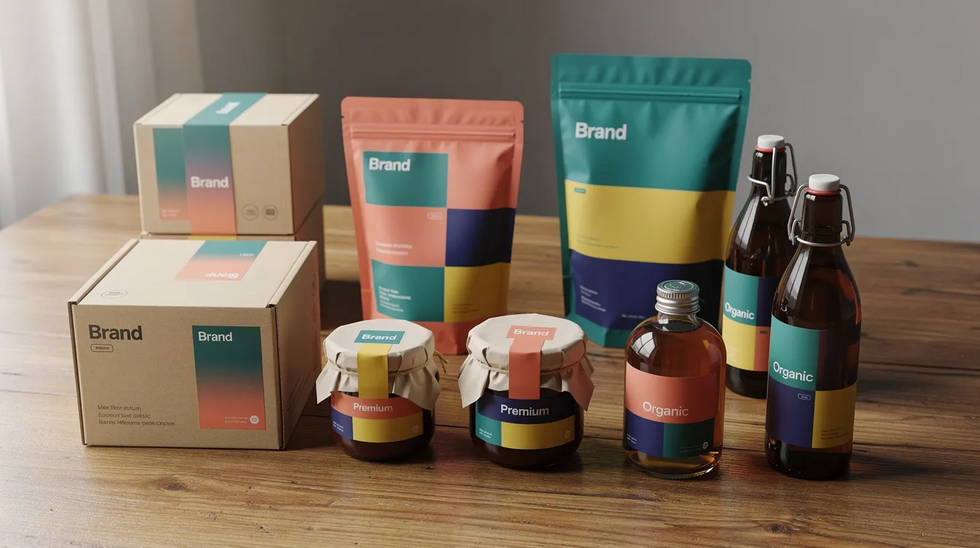
Clearing Your Brand: Comprehensive Trademark Searches for Online Businesses
The number one reason e-commerce trademark applications are refused is likelihood of confusion with existing registrations. Conducting a comprehensive trademark search is essential before filing an application. A comprehensive clearance search should cover:
-
Federal USPTO database (TESS/TSDR)
-
State trademark registries
-
Business name records and secretary of state filings
-
Domain names and WHOIS records
-
Major marketplaces (Amazon, Etsy, Walmart)
-
Key social platforms (Instagram, TikTok, Facebook)
Exact matches are not the only risk. The search must consider spelling variations, similar sounds, translations (e.g., "Lupo" vs. "Wolf"), and similar overall commercial impressions. An examining attorney evaluates marks based on appearance, sound, meaning, and the relatedness of goods or services. Trademark registration can block competitors from acquiring conflicting marks, but only if you file first and your mark is clear of conflicts.
Search results should produce a practical risk assessment: low, moderate, or high. That assessment determines whether to proceed with the new mark, adjust it, or pick a different brand name before committing to ad campaigns and inventory. Trademarks help prevent competitors from using similar branding, but only when you clear the field first.
Planning to launch or rebrand in 2026? Have the Law Office of Lindsey M. Straus conduct a tailored clearance search. Contact us online or call (508) 896-8008.
Trademark Classes that Matter Most for E-Commerce Brands
Trademarks are categorized by international classes covering goods and services under the Nice Classification system, which has 45 trademark categories. Classes 1 through 34 cover physical goods, while classes 35 through 45 cover services. The USPTO protects marks only for the goods or services listed in the application.
"E-commerce" is a sales channel, not a trademark class. Founders must register in the classes matching what they actually sell. You must file separate applications for each trademark class (or pay an additional class fee within a single application).
Key classes for online sellers:
|
Class |
Covers |
Typical E-Commerce Use |
|---|---|---|
|
35 |
Retail and advertising services |
Online retail store services, operating marketplaces, curating goods for sale |
|
9 |
Downloadable software and digital products |
Mobile apps, e-books, digital downloads |
|
42 |
SaaS and IT services |
Subscription software platforms, hosted web tools |
|
25 |
Clothing |
Apparel brands (DTC, marketplace) |
|
3 |
Cosmetics |
Skincare, beauty products |
|
28 |
Toys and fitness equipment |
Fitness gear, games |
|
16 |
Paper goods |
Planners, journals, stationery |
|
Many e-commerce brands need multiple classes to cover all their products and services. Each additional class adds to the required fees, so plan strategically. |
Selecting the Right Goods and Services for an Online Brand
The goods and services description controls the scope of your trademark protection. This is where DIY applicants make costly, non-fixable mistakes.
Use the USPTO's ID Manual to choose accurate, pre-approved identifications. Pre-approved descriptions reduce the risk of an examining attorney objecting. Overly broad or inaccurate descriptions trigger office actions and can weaken your position in later disputes.
Compare these two descriptions:
-
Vague: "online store"
-
Precise: "online retail store services featuring clothing, hats, and footwear"
The precise version defines your scope and survives examiner scrutiny. Strategic balance matters: cover your current offerings and realistic near-term expansion (e.g., adding jewelry or accessories), but avoid overreaching into unrelated fields that increase opposition risk and additional fees.
Once the application is filed, goods and services cannot be broadened. You can only narrow them. Getting the description right on the first filing saves time, money, and headaches.
How the Federal Trademark Application Process Works for Online Businesses
All applicants, whether selling online or in brick-and-mortar stores, follow the same federal registration process. Trademark applications typically take 6 to 12 months from filing to first action, with total registration timelines running 12 to 18 months in straightforward cases.
Choosing your filing basis:
-
Use-in-commerce (Section 1(a)): For marks already in actual use across state lines. Your e-commerce platform shows the mark, and you have shipped orders to customers in more than one state.
-
Intent-to-use (Section 1(b)): For brands selected but not yet launched. You must demonstrate bona fide intent to use the mark in commerce.
The filing process, step by step:
-
Select mark format (standard character mark, design mark, or sound mark), filing basis, and goods/services classes.
-
File via the USPTO's electronic system (TEAS). The filing fee is $250 or $350 per class, depending on the form used.
-
Wait approximately 4.3 months (current average) for the first examining attorney review.
-
Respond to any office action within three months of issuance, with an optional three month extension available for a fee.
-
If the examining attorney approves, the mark is published in the Trademark Official Gazette.
-
After a 30-day publication period, third parties can file an opposition or extension request through the Trademark Trial and Appeal Board.
-
If unopposed, use-based applications proceed toward a registration certificate. Intent-to-use applications receive a notice of allowance.

Intent-to-Use Filings, Notice of Allowance, and Statements of Use
Many online entrepreneurs file intent-to-use applications before launch to secure a priority date for their new mark. You can apply for a trademark before using it in commerce; this is the entire purpose of the intent-to-use filing basis.
About eight weeks after an unopposed publication date, the USPTO issues a notice of allowance for a Section 1(b) application. This confirms the mark is allowed but is not yet a registered mark.
From the notice of allowance mailing date, the applicant has six months to either:
-
File a statement of use showing actual use in commerce with acceptable specimens, or
-
File an extension request to keep the application alive
Multiple extensions are possible in six-month increments, up to a statutory limit. Failure to file either a statement of use or a timely extension request results in abandonment.
Working with an attorney helps coordinate product launch dates, packaging, and website changes so acceptable proof of use is ready before USPTO deadlines expire.
Office Actions, Final Refusals, and Appeals for Online Brands
An office action is an official letter from the examining attorney listing issues that must be resolved before registration. Problems range from administrative corrections (a missing disclaimer, a vague description) to substantive refusals (likelihood of confusion with existing trademarks, descriptiveness, or specimen deficiencies).
Common office action issues for online sellers:
-
Likelihood of confusion with similar marks in the USPTO database
-
Goods/services descriptions that are too vague or incorrect for e-commerce offerings
-
Specimens that fail to show the mark used properly on a website or product listing (screenshots must include a URL, date, and purchasing information)
You must respond to office actions within a specified timeframe: three months from the mailing date, with a possible three-month extension for a fee. Missing the deadline means automatic abandonment of your application.
If all objections are not overcome, the examining attorney may issue a final refusal. After a final refusal, the main option is to appeal to the Trademark Trial and Appeal Board.
Facing a complex office action or final refusal? Contact the Law Office of Lindsey M. Straus promptly. Contact us online or call (508) 896-8008 before deadlines pass.
Managing Oppositions and TTAB Proceedings for E-Commerce Brands
Once a mark is published in the Trademark Official Gazette, any party who believes it would be damaged by registration has 30 days to file an opposition or ask the appeal board for an extension request to oppose.
TTAB oppositions resemble federal court litigation: they involve pleadings, discovery, and briefing. But they take place within the trademark office rather than a traditional courtroom and focus solely on whether the mark should register. The TTAB does not award damages or injunctions; it decides registrability.
An online seller might need to oppose another party's application when, for example, a new marketplace seller adopts a confusingly similar brand name in the same product category. TTAB appeals are also available after final refusals from an examining attorney. Outcomes at the trademark trial and appeal board can affect a brand's ability to expand on an e-commerce platform and secure platform-specific protections like Amazon Brand Registry.
TTAB proceedings are technically demanding. Online businesses confronted with an opposition, or considering filing one, need legal counsel experienced in trademark practice before the appeal board.
Maintaining, Renewing, and Enforcing Your Registered Trademark Online
A registered trademark is not a one-time event. Maintaining a registered trademark requires filing maintenance documents and renewal applications on time. Trademark registration can protect your brand indefinitely with renewals, but only if you meet every deadline.
Key maintenance deadlines:
-
Fifth and sixth year after registration: Declaration of Use (Section 8) – Proves continued use in commerce
-
After 5 years continuous use: Declaration of Incontestability (Section 15) – Strengthens legal rights against challengers
-
Every 10 years: Sections 8 and 9 renewal – Keeps registration alive
Consistent, non-misleading use of your mark on websites, product pages, packaging, and marketing materials matters. Non-use for three consecutive years can create a presumption of abandonment under trademark law.
Enforcement in the online environment requires ongoing monitoring. Watch for confusingly similar names or logos on Amazon, Etsy, app stores, domains, and social media. Trademarks can be enforced on platforms like Amazon and social media using platform takedown mechanisms and cease-and-desist letters. Trademark rights help prevent unauthorized use of your specific brand across digital channels.

International Considerations: Madrid Protocol and Global E-Commerce Expansion
The Madrid Protocol is a system administered by WIPO that allows owners of a U.S. application or registration to request trademark protection in over 100 member countries through a single centralized filing.
Starting with a U.S. registration makes sense for most online businesses. But brands planning to sell into Canada, the EU, the UK, or other markets should evaluate whether and when international filings are worth the cost. Each foreign trademark office still examines the mark under its own national laws. A Madrid Protocol extension does not create a single worldwide trademark; it simplifies the filing process and can reduce initial costs compared to filing country by country.
Scenarios that may justify international filings:
-
A U.S. DTC brand launching paid social campaigns in Europe
-
A SaaS platform onboarding non-U.S. enterprise clients
-
An e-commerce brand sourcing and selling products through international fulfillment centers
One risk: if the basic U.S. registration is cancelled within five years, international registrations depending on it may also cancel unless transformed into national filings. Plan accordingly.
Consult with an attorney who understands both U.S. and Madrid Protocol options before investing heavily in foreign ad campaigns or inventory under an unprotected brand name.
Why Work with the Law Office of Lindsey M. Straus on Your Online Brand Trademark
The Law Office of Lindsey M. Straus is a Brewster, Massachusetts-based solo practice that represents e-commerce brands, startups, and creators nationwide in federal trademark matters. Lindsey Straus has secured hundreds of federal trademarks for small and midsize businesses, with an approach built on pragmatic advice, clear communication, and cost-conscious strategies tailored to online sellers.
Services relevant to e-commerce brands include: comprehensive clearance searches, advice on selecting protectable brand names, filing and prosecuting USPTO applications, responding to office actions, handling TTAB disputes, and creating enforcement strategies for platforms and marketplaces.
Clients work directly with Lindsey rather than being passed between departments. The firm accepts major credit cards and Venmo, and operates with low overhead so that clients get experienced counsel without large-firm billing rates.
Whether you are anywhere in the United States building or scaling an online business, call (508) 896-8008 or contact us online to discuss your goals and get a concrete plan for protecting your e-commerce brand.
Frequently Asked Questions about Trademarks for Online Businesses
Do I need a registered trademark before selling on Amazon, Etsy, or Shopify?
Most e-commerce platforms allow sellers to open accounts without a federal registration. But programs like Amazon Brand Registry require either a registered trademark or, in some cases, a pending application with a serial number. Without registration, your enforcement options on these platforms are limited.
For any serious, long-term e-commerce brand, filing early is wise. Many founders file on an intent-to-use basis so registration issues don't delay marketing initiatives or platform protections a year into growth. Platform requirements change over time; the firm can help align your trademark strategy with current marketplace rules.
What counts as "use in commerce" for an online business?
"Use in commerce" means bona fide commercial activity across state lines: real sales shipped to customers in more than one state, with the mark displayed on the website, product packaging, or digital storefront. Merely reserving a domain, posting a "coming soon" page, or creating social media accounts without actual sales does not qualify.
Acceptable specimens for online sellers include screenshots of a checkout page showing the mark near the goods with pricing and a shopping cart, product packaging photographed with the mark visible, or order confirmations reflecting interstate sales. Every specimen must include a URL and date.
Can I add more products or services to my trademark after it registers?
No. Once an application is filed and registered, the listed goods and services cannot be broadened. You can delete items or narrow the description, but you cannot add new categories under the same registration.
To cover new product lines (expanding from apparel into cosmetics, or launching a SaaS app under the same brand name), you must file a new application in the additional class. E-commerce brands with ambitious growth plans should map out their class and filing strategy with counsel from the start.
How long will it take my online brand to get a federal trademark in 2026?
Based on current USPTO processing data, first examining action takes about 4.3 months on average, and total processing time runs about 10.4 months. Straightforward applications without refusals or oppositions typically reach registration within 12 to 18 months.
Complex office actions, TTAB proceedings, or delays in filing a statement of use for intent-to-use applications can extend the timeline. Even while an application is pending, you gain a public claim to the mark and a filing date that serves as a priority date against later filers.
When should I talk to a trademark attorney about my e-commerce brand?
As soon as you are seriously considering a new brand name, logo, or major rebrand. The ideal time is before investing in inventory, packaging, and paid traffic. Early guidance prevents choosing a name with no legal strength, avoids rebranding after launch, and aligns your trademark plan with business milestones like fundraising, global expansion, or wholesale distribution.
Call the Law Office of Lindsey M. Straus at (508) 896-8008 or contact us online to discuss the best way to protect your online business and intellectual property.


Comments
There are no comments for this post. Be the first and Add your Comment below.
Leave a Comment