
Filing a trademark application with the United States Patent and Trademark Office (USPTO) requires more than selecting a strong mark and identifying your goods or services. This guide is for business owners, startups, and anyone applying for a federal trademark. Understanding trademark specimen requirements is essential because submitting the right specimen is crucial for successful trademark registration and avoiding costly delays. The core topic of this page is the "trademark specimen"—the evidence you must submit to the USPTO to prove that your trademark is being used in commerce. This requirement trips up applicants at every stage of the process, from initial filing through renewal decades later. This guide covers what qualifies as an acceptable specimen, what the USPTO rejects, and how to handle a specimen refusal if one lands in your inbox.
Key Takeaways
-
A trademark specimen is real life evidence of how your mark appears in commerce in connection with specific goods or services. Every trademark application filed with the USPTO on a use-based basis must include at least one specimen of use per class, and intent-to-use applicants must submit specimens later before registration can issue.
-
Acceptable specimens differ for goods and services. For goods, the mark must appear on the product, its packaging, labels, or on a web page showing the product with purchasing information. For services, the mark must appear in advertising materials, on websites describing the services, on invoices, or on signage where services are rendered.
-
The specimen must show the exact mark filed in the application, functioning as a source identifier at the point of sale, not as decoration, ornamentation, or on a mock up. A compliant specimen increases chances of successful trademark registration.
-
Intent-to-use applicants submit specimens with an Amendment to Allege Use or Statement of Use after the Notice of Allowance. Late, doctored, or non-compliant specimens can cost the entire application.
-
Businesses, startups, creators, and e-commerce brands nationwide can contact the Law Office of Lindsey M. Straus at (508) 896-8008 or contact us online for help choosing and filing acceptable trademark specimens.
Specimen of Use: Purpose, Importance, and Common Pitfalls
The USPTO will not issue a federal trademark registration without at least one acceptable specimen of use per class that proves real-world, interstate use in commerce. Specimens provide evidence of trademark use in commerce; without them, the trademark office has no way to confirm that your mark functions as a source identifier tied to the goods or services you have listed in your application. Specimens provide evidence of trademark use in commerce.
A trademark specimen is evidence submitted to the USPTO to prove that a trademark is being used in commerce. A specimen of use is not evidence that you plan to use a mark. It is proof that you are already selling goods or rendering services in U.S. commerce under that mark. The United States Patent and Trademark Office, an agency of the U.S. Department of Commerce, reviews each specimen to confirm that the mark functions as a trademark and is properly associated with the services identified or goods claimed.
The most frequent specimen problems include:
-
Submitting mockups, prototypes, or a printer's proof that has never been used in actual trade
-
Providing a specimen that shows a different version of the mark than the one in the application drawing
-
Submitting specimens where the mark appears as mere ornamentation (for example, a large decorative phrase across the front of a t shirt) rather than as a brand identifier
-
Failing to show a direct association between the mark and the listed goods or services at the point of sale
If you have already received a specimen refusal or Office Action, call (508) 896-8008 for a personalized review by Attorney Lindsey M. Straus.
What Is a Trademark Specimen of Use?
A trademark specimen of use is a real example of how the applied-for mark appears in the ordinary course of trade in connection with specific goods or services. A trademark specimen is evidence submitted to the USPTO to prove that a trademark is being used in commerce. It is actual evidence submitted to the USPTO proving that the mark is used in commerce, not a concept, plan, or design file.
The trademark drawing in the application shows what you want to protect. The specimen shows how that trademark appears in the marketplace. These are two different things: the drawing is your claimed mark; the specimen is a photograph, screenshot, scan, or other capture of the mark as consumers actually encounter it on packaging, tags, advertisements, marketing materials, or web pages.
The identification of goods and services in your trademark application controls what type of specimen is required. A clothing brand needs different acceptable specimens than a company offering downloadable software or a firm providing consulting services. The Law Office of Lindsey M. Straus routinely advises clients nationwide on how to align specimens of use with the precise wording of their trademark application to avoid preventable rejections.

Use in Commerce vs. Intent to Use: When Specimens Are Required
Under the Trademark Act (the Lanham Act), "use in commerce" means the mark is placed on goods sold or transported across state lines, or used in connection with services rendered to customers in interstate or U.S. territorial commerce. Local, intrastate, or pre-launch activity does not qualify. This concept separates a use-based filing from an intent-to-use filing.
For Section 1(a) use-based applications, actual use applications require specimens at filing. You must submit at least one acceptable specimen per class at the time you file, along with your dates of first use in commerce and first use anywhere.
For Section 1(b) intent-to-use applications, specimens are not required at initial filing. Instead, after the USPTO issues a Notice of Allowance, you must file a Statement of Use (SOU) with acceptable specimens. Before that point, you may file an Amendment to Allege Use if you begin commercial use before publication. Specimens for intent-to-use must be filed within six months after the Notice of Allowance, though applicants can request up to five additional six-month extensions, allowing up to 36 months total to begin use and submit evidence.
Later in the life of the registration, specimens of use are also required for maintenance filings: a Section 8 declaration of continued use between the 5th and 6th year after the registration date, and combined Section 8/9 renewal filings every 10 years thereafter.
Startups and e-commerce brands unsure whether they have "use in commerce" should schedule a consultation via the firm's USPTO trademark application page or by calling (508) 896-8008.
Specimen Requirements for Goods vs. Services
The USPTO applies separate specimen requirements for goods (tangible products, digital downloads, computer programs) and services (activities performed for others). Understanding this distinction is central to avoiding a specimen refusal, because what works for one category will often fail for the other.
Specimens for goods must show the trademark on the product. For goods, acceptable specimens must show the mark on the goods themselves, on labels or tags attached to the goods, on packaging, or on a point of sale display or web page that includes ordering information such as price and an "Add to Cart" button.
Specimens for services must show the trademark in advertising. For services, acceptable specimens typically consist of advertising and promotional materials, websites describing the services, brochures, signage at the location where services are delivered, invoices, or business documents that clearly connect the mark to the services offered.
One distinction that surprises many first-time applicants: advertising materials are generally not acceptable specimens for goods, but are often strong specimens for services. The USPTO treats a brochure or web page differently depending on whether you are claiming the mark for a product or for a service.
Attorney Lindsey M. Straus can help clients classify their offerings correctly and select appropriate acceptable specimens per International Class to comply with USPTO expectations. The USPTO prefers digital submissions for trademark specimens over physical samples, so most specimens today are uploaded as JPG or PDF files through the electronic filing system.
Acceptable Specimens for Goods: Packaging, Labels, and Online Sales
Acceptable trademark specimens for goods must show the mark as consumers encounter it at or before purchase. The specimen shows the trademark on the product itself, on its container, or in a context where a buyer can immediately place an order.
Common acceptable specimens for goods include:
-
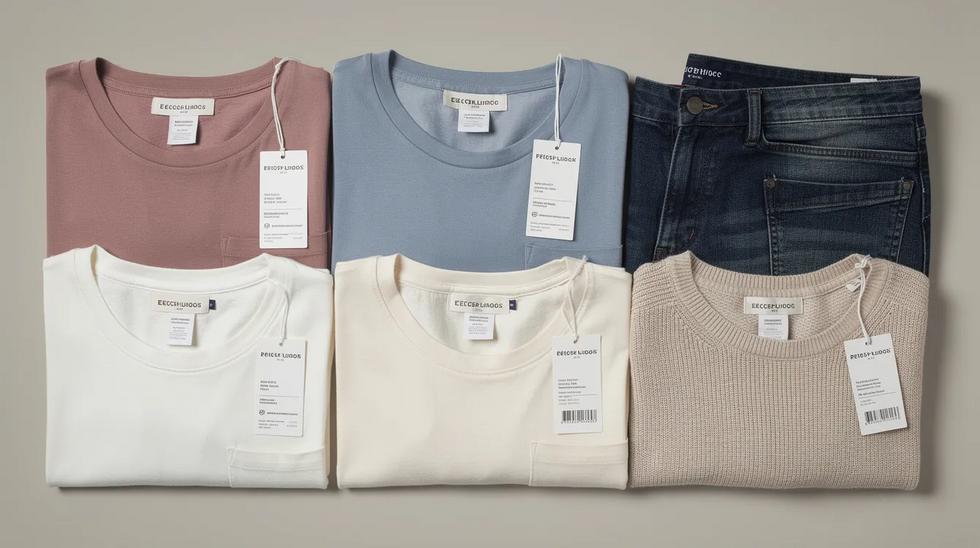
Hang tags and a label sewn into apparel (the neck tag of a t shirt bearing the mark, or a woven label inside a jacket)
-
Product packaging such as printed boxes for cosmetics, food, or electronics
-
Container labels for beverages, supplements, or detergent soap packaging
-
Mailing labels or packing slips that display the mark in association with the goods
Point of sale displays also qualify, both physical and digital. In-store displays that show the mark in close proximity to the goods count, as do catalog pages and a webpage showing an e-commerce product page. For a web page to work as a specimen for goods, it must display the mark, a product image, price appearing near the product, and a purchasing mechanism (an "Add to Cart" button or equivalent ordering link).
For downloadable software and mobile apps, acceptable specimens might include screenshots of the app download page, launch screens, the title bar of the actual program, or an in-app splash screen where the mark is clearly shown as the product name.
Webpage specimens must include the URL and the date accessed or printed. If these are missing, the examining attorney may refuse the specimen. The specimen must include the URL and date when submitted from a website. The Law Office of Lindsey M. Straus helps clients curate and annotate screenshots to ensure the mark, price, and purchasing mechanism are clearly visible for online specimens.
Acceptable Specimens for Services: Websites, Ads, Invoices, and Signage
Because services are not physical objects, specimens for services must show the mark used in advertising, marketing, or in the actual rendering of the services, with a textual description or clear indication of what is being offered. Specimens for services must demonstrate use in advertising or sale of the services listed in the application.
Common examples of acceptable specimens for services include:
-
Web pages showing the services with the mark prominently displayed and a description of the services offered (consulting, coaching, design, distributorship services, or other professional offerings)
-
Brochures or flyers advertising the services under the mark
-
Printed matter such as newsletters or informational matter distributed to clients
-
Social media pages that meet USPTO criteria by clearly describing services rendered
Less obvious but powerful specimens for services include photographs of signage at the location where services are delivered (a sign over a retail shop, a banner at a trade show, or lettering on an office door), business cards and letterhead that list the services, and invoices or contracts that show the mark and reference the services performed. Even a band's drum head bearing the mark can serve as a service specimen in the right context.
Specimens for services must show that services have actually been rendered in commerce, not merely planned. A purely pre-launch landing page with an introductory message box and no indication of active service delivery will likely be rejected.
Attorney Lindsey M. Straus can review a client's website and marketing materials to identify which screenshots or documents are most likely to satisfy the USPTO as acceptable service specimens.
Examples of Acceptable Trademark Specimens (Goods and Services)
Here are concrete examples of acceptable specimens that would satisfy USPTO expectations when correctly captured and submitted.
For physical goods:
-
A photo of a coffee mug with the mark stamped on the bottom or side
-
A printed box for laundry detergent bearing the mark on the front panel
-
An electronics product manual cover using the mark as the product name
-
A photograph of intended packaging already in commercial use showing the mark on a laptop appearing on a retail shelf
For online goods:
-
A screenshot of an e-commerce page offering branded skincare products that shows the mark next to the product image, with price, quantity selector, and shopping cart button visible, along with URL and date notation. Web pages showing the mark alongside the product with purchasing information are among the most commonly submitted specimens today.
For services:
-
A screenshot of a website home page for "XYZ CONSULTING" explaining business advisory services under the mark
-
A scanned brochure for financial investment services using the mark prominently
-
An invoice for marketing services displaying the mark at the top and listing the services rendered below
For additional guidance on what the USPTO considers acceptable, review the USPTO's specimen and drawing requirements page.

What Is NOT an Acceptable Specimen? Mockups, Ornamentation, and Other Traps
Many trademark office refusals result from specimens that are not "real" or do not show the mark functioning as a trademark. Avoiding unacceptable specimens saves substantial time and money, since each Office Action response costs weeks of delay and often requires attorney fees.
Clearly unacceptable specimens include:
-
A digitally altered image, Photoshop rendering, or mock up of labels or packaging that has never been manufactured or used in trade
-
A printer's proof or prototype that was never distributed to consumers
-
Pre-sale crowdfunding pages that solicit funding but do not offer goods for purchase
-
"Coming soon" web pages that do not show actual ordering or rendered services
-
Internal documents such as internal memos, purchase orders to suppliers, or manufacturing specs
Ornamental or decorative use does not qualify. A large slogan printed across the front of a t shirt or hat, where consumers perceive the phrase as a design element rather than a brand name, will be refused as merely ornamental. The mark appears as decoration, not as a source identifier.
Mere use of a term in a domain name or as a trade name without clear reference to specific goods or services often fails, especially if the mark is perceived as the name of the website rather than as a source indicator for the services listed or goods claimed.
Submitting knowingly false or doctored specimens can raise serious problems, including possible fraud allegations before the Trademark Trial and Appeal Board. Consult legal counsel before attempting to "fix" a specimen by editing.
If you are unsure whether your specimen is acceptable, request a consultation via the firm's trademark registration page or by calling (508) 896-8008.
Specimen Requirements Over the Life of a Trademark Registration
Specimens are not a one-time requirement. They recur throughout the life of a trademark registration to prove continued actual use and prevent dead marks from clogging the federal register.
For U.S. registrations based on use or intent to use, trademark owners must submit periodic maintenance filings with specimens of current use:
-
A Section 8 declaration of continued use, filed between the 5th and 6th year after the registration date
-
Combined Section 8/9 renewal filings every 10 years thereafter
Specimens submitted for maintenance must show current use on or in connection with the goods or services still claimed. If certain items are no longer sold or offered, the registration can be amended to delete those items. Failing to do so risks partial cancellation.
Foreign-based registrations (under Sections 44 and 66) may initially avoid U.S. use requirements, but they remain vulnerable to non-use challenges. If the mark is not later used in U.S. commerce, a third party can petition to cancel the registration, as the Trademark Manual of Examining Procedure outlines.
Attorney Lindsey M. Straus offers ongoing monitoring and renewal services, including advising on appropriate maintenance specimens, to help businesses and brands maintain their federal trademark protection.
Specimen Refusal: Why the USPTO Rejects Evidence of Use
A specimen refusal is a common type of USPTO Office Action where the examining attorney finds that the submitted specimen does not meet requirements under 37 C.F.R. §2.56. The USPTO issues an Office Action for rejected specimens, and the applicant must respond within the stated deadline or risk losing the filing.
Typical reasons for a specimen refusal include:
-
Do not show the mark used in commerce with the identified goods or services
-
Are merely ornamental (the mark appears as decoration, not a brand indicator)
-
Are illegible, low resolution, or obscured
-
Show a materially different mark than the one applied for
-
Lack point of sale information (no price, no ordering mechanism) for goods
-
Are missing URL or access date for webpage specimens
A specimen refusal can often be overcome by submitting a different, valid specimen that predates the relevant deadline. For use-based applications, the substitute specimen must show use as of the filing date. For intent to use applications, the substitute must show use before the Statement of Use deadline expires.
Failure to address rejection issues may abandon the application. If an applicant cannot produce a qualifying specimen that meets timing requirements, the application (or particular goods or services) may need to be amended, limited, or allowed to go abandoned.
The Law Office of Lindsey M. Straus regularly prepares responses to USPTO Office Actions involving specimen refusals and can advise on whether to argue, amend, or provide substitute specimens.
Overcoming a Specimen Refusal: Replacement Specimens and Strategy
A well-planned strategy can often rescue a valuable filing even after a specimen refusal, provided that genuine, timely specimens of use exist. Applicants can respond to Office Actions with new specimens, but timing and compliance matter.
Replacement specimens must show use of the trademark directly in commerce by the relevant date: for use-based filings, on or before the application filing date; for Statements of Use, on or prior to the SOU deadline or extension period. New specimens must exist before the Statement of Use expiration; you cannot create a specimen after the deadline and backdate it.
Common tactics include:
-
Submitting a different photograph of the product packaging that more clearly shows the mark
-
Providing a clearer e-commerce page screenshot with visible price appearing alongside the product and an ordering button
-
Offering a different document such as an invoice, brochure, or printed catalog that meets USPTO rules
-
Submitting multiple specimens to give the examining attorney alternatives
Applicants can request extensions for submitting new specimens in the context of intent to use application filings. In some situations, applicants may amend the filing from Section 1(a) to Section 1(b) if appropriate and allowed, resetting when proof of use is required.
If you are facing a confusing Office Action, contact the Law Office of Lindsey M. Straus promptly via the firm's trademark Office Action page or by calling (508) 896-8008 to avoid missing strict USPTO response deadlines.
Matching the Mark: Consistency Between Application and Specimen
The trademark as it appears on the specimen must be the same as the applied-for mark in the USPTO record. The trademark on specimens must match the application exactly, and discrepancies are a frequent source of refusal under the examining procedure outlined in the Trademark Manual.
Differences in spelling, punctuation, spacing, or wording can render a specimen unacceptable. Adding or omitting words from the mark changes its commercial impression. For example, if your application claims "BRIGHT BREW" and your specimen shows "BRIGHT BREW COFFEE CO.," the examining attorney may refuse the specimen because the additional wording alters the mark.
For special form marks (logos and stylized designs), minor variations are sometimes tolerated, but material design changes, color shifts when color is claimed, or added graphic elements create problems. A standard character mark gives more flexibility; any font, color, or size is acceptable as long as the wording matches exactly.
Extra wording on packaging or websites that is not part of the applied-for mark is often acceptable, so long as the core mark from the drawing is clearly present and recognizable as the source identifier. The mark appears as a distinct element, separate from descriptive or promotional text.
Attorney Lindsey M. Straus frequently helps clients choose between standard character and special form applications and align their brand usage with their trademark filings to minimize mismatch issues.
How Many Specimens Do You Need, and Per Which Classes?
One specimen is required for each class of goods or services listed in the trademark application or registration. That is the minimum. But applicants may submit multiple specimens per class as backups, and doing so is often wise.
While you may list several goods or services within a single class, only one specimen per class is technically required if it clearly shows the mark used with at least one listed item. However, broader evidence can strengthen the record. Multiple specimens can strengthen a trademark application by giving the examining attorney more options if one specimen raises questions.
For multi-class applications, each class must be supported by at least one proper specimen appropriate for that class. A clothing hang tag works for Class 25; a consulting website page works for Class 35. You cannot use a single specimen to cover unrelated classes unless it genuinely shows use for goods or services in each.
In practice, many applicants work with counsel to assemble more than the minimum. Submit multiple specimens so that if one is questioned, another stands ready. The Law Office of Lindsey M. Straus offers flat-fee federal trademark packages that include guidance on selecting and filing acceptable specimens per class for businesses and brands throughout the United States.
Working With the Law Office of Lindsey M. Straus on Trademark Specimens
Attorney Lindsey M. Straus has over two decades of experience helping entrepreneurs, online sellers, content creators, and professional service firms secure and maintain federal trademark registrations. That experience includes navigating the specimen requirements that cause so many applications to stall.
The firm's typical process for specimen support includes reviewing the client's business model and sales channels, identifying which products or services correspond to which classes, examining existing packaging, websites, and marketing materials, and selecting or improving specimens before submission. The goal is to submit evidence that the examining attorney accepts on the first pass.
The firm also assists with responding to USPTO Office Actions involving specimen refusals, preparing Statements of Use for intent to use applications, and handling maintenance filings that require new specimens years after initial registration.
The Law Office of Lindsey M. Straus is based in Brewster, Massachusetts and serves trademark clients nationwide remotely, while also providing estate planning and uncontested divorce services to clients throughout Cape Cod and the Islands.
Schedule a consultation by calling (508) 896-8008 or by using the firm's secure online contact form to discuss your trademark specimen questions.

FAQs: Trademark Specimens and Proof of Use
Do I need a specimen for every product or service I offer under my trademark?
The USPTO requires at least one acceptable specimen per class of goods or services, not per individual product or service. However, the mark must actually be in use for all items claimed in that class. If you list five products in Class 25 but only sell two, you risk a challenge on the unused items.
During maintenance filings, owners should delete items that are no longer in use to avoid risking cancellation. Attorney Lindsey M. Straus can review a client's product and service lineup and recommend a prudent strategy for specimens and class coverage.
Can I change my specimen after my trademark registers?
You cannot retroactively swap out the specimen that was accepted for registration. However, you will submit new, current specimens when filing maintenance and renewal documents (Section 8 and Section 8/9) to show continued use of the trademark.
If you change how the mark appears or what it is used on, you may need a new application for the updated branding rather than relying on an old registration. Consult an attorney before rebranding or altering how the mark appears on packaging or websites to understand the impact on your registration and future specimens.
Will my Amazon, Etsy, or Shopify listing count as an acceptable specimen?
In many cases, a properly formatted Amazon, Etsy, or Shopify product page can serve as an acceptable specimen for goods if it is a webpage showing the mark near the goods, includes price and purchasing information, and is not purely a promotional teaser. The page must function as a point of sale display.
Capture the full page, including URL and access date, and confirm that the mark is not only part of the store name but also appears near the specific product for which trademark protection is sought. Attorney Lindsey M. Straus frequently works with e-commerce sellers to extract compliant screenshots from major platforms and avoid common listing pitfalls.
Is a social media post enough to prove use of my trademark?
Some social media posts or profile pages may work as acceptable specimens for services if they clearly describe the services and show the mark as a source identifier. Many casual posts are too informal or vague to qualify.
For goods, a social media post is more likely to succeed if it functions as a point of sale display; for example, it shows the product, pricing, and an ordering link rather than just displaying the mark in isolation. Treat social media as a supplement to robust website and packaging specimens, and ask counsel whether any particular post meets USPTO criteria for service marks or goods marks.
What should I do if I am not yet selling products but want to secure a trademark now?
An intent to use application (Section 1(b)) allows an applicant who has a bona fide intention to use the mark in commerce to file now and submit acceptable specimens later once sales or services begin. You do not need to submit evidence of use at the initial filing date.
After the Notice of Allowance, you have an initial six-month window, with possible extensions up to 36 months, to begin use and submit a Statement of Use with a proper specimen. Contact the Law Office of Lindsey M. Straus at (508) 896-8008 or via the federal trademark registration page to map out a filing and specimen strategy aligned with your launch timeline.


Comments
There are no comments for this post. Be the first and Add your Comment below.
Leave a Comment